
The Architecture of the Universal Entertainment Platform: From Fragmented Silos to AI Orchestration
For years, the streaming wars were defined by fragmentation-each studio, network, and publisher launching its own siloed platform. The user experience devolved into a labyrinth of subscriptions, logins, and disjointed interfaces. Now, a new paradigm is emerging, driven by a force that promises to unify this chaos: artificial intelligence. The concept of a universal entertainment app, powered by sophisticated AI, is no longer a speculative sci-fi trope; it's a rapidly crystallizing architectural reality. We are witnessing the death of the aggregator and the birth of the intelligent orchestrator. This shift isn't merely about convenience. It represents a fundamental re-engineering of how content is discovered, licensed, and delivered. The core hypothesis is that a single, AI-native application can serve as the primary interface for all entertainment, dynamically curating a personalized feed from a global library of licensed catalogs, user-generated content, and live events. This is the promise of the universal entertainment platform, and its foundation is laid with layers of machine learning, vector databases, and real-time inference engines.
TechCrunch recently highlighted this trend, pointing to a future where the "app" itself becomes a thin client for a vast, AI-orchestrated content mesh. For engineers and architects building the next generation of media systems, this raises critical questions about data pipelines, latency budgets, and the ethical boundaries of algorithmic curation. This article will dissect the technical architecture behind this vision, examining the systems that make AI-driven entertainment both possible and precarious. The rise of AI entertainment apps demands a new approach to backend infrastructure, one that prioritizes real-time personalization over static catalog browsing.

Beyond the Recommender: The Shift to Proactive Content Orchestration
Traditional recommendation systems are reactive. A user watches a show, the system logs the event, and a collaborative filtering algorithm suggests similar titles. This is the legacy of the "people who bought this also bought" model-a statistical pattern-matching exercise. The future of streaming apps, however, demands proactive orchestration. The app must anticipate intent before a user even opens it. This requires a shift from batch-processed collaborative filtering to real-time, session-based modeling. AI content curation at this level is not about predicting what a user might like; it's about constructing a narrative of discovery in real time.
Multi-Model Architecture for Real-Time Personalization
In production environments, we see this manifesting as a multi-model architecture. A lightweight, on-device model tracks immediate user behavior (scroll speed, pause duration, re-watch segments). This data is streamed to a central inference service that combines it with a user's long-term preference vector, stored in a vector database like Milvus or Pinecone. The system then queries a knowledge graph of content metadata-not just genre and cast, but narrative complexity, emotional valence, and visual style vectors. The result is a feed that feels less like a catalog and more like a conversation. This orchestration layer is the true differentiator. It decides not just what to show, but when and how. For example, if a user is detected to be in a "commuting" context (based on time of day and connection type), the system might prioritize short-form, audio-first content. If the user is on a large screen at home, it might surface a 4K HDR feature with a high "immersion score." This is intelligent content discovery operating at the intersection of context, content, and user state.
Architecting the Universal Backend: A Federated Content Layer
The greatest engineering challenge for a universal entertainment app isn't the frontend UI, but the backend content aggregation layer. Licensing agreements, regional restrictions, and disparate streaming protocols (HLS, DASH, proprietary DRM) create a complex graph of availability. A universal platform can't host all content; it must act as a federated gateway. This requires a robust, event-driven architecture for rights management and content routing. We are seeing the emergence of "content abstraction layers" that normalize metadata and streaming endpoints. A common pattern involves using a central rights management service that subscribes to a Kafka topic for license updates. When a user requests a title, the orchestrator queries this service to determine the optimal source-perhaps a direct CDN edge for owned content, or a redirect to a partner's authenticated playback URL. This is essentially a real-time, policy-based routing problem, similar to how a CDN routes traffic, but applied to intellectual property.
Availability-Aware Media Personalization Algorithms
This federated model directly impacts the media personalization algorithms. The personalization engine must be "availability-aware." It can't recommend a title that's geo-blocked or currently unlicensed. This introduces a constraint satisfaction problem into the recommendation pipeline. Modern systems solve this by embedding availability status as a feature in the ranking model, or by using a two-stage retrieval process: first, find candidate items from the global catalog; second, filter by the user's current entitlements before ranking. This prevents the frustrating "title not available in your region" error that plagues current aggregators. For a truly personalized streaming experience, the system must also consider temporal availability-content that will be removed from the catalog next week should be surfaced differently than evergreen titles.
The Feedback Loop: Training Models on User Intent, Not Just Clicks
One of the most common pitfalls in building AI content curation systems is optimizing for the wrong metric. Click-through rate (CTR) is a deceptive signal-it measures curiosity, not satisfaction. A user might click on a high-budget trailer but abandon the content after two minutes. The true signal is engagement depth-session duration, completion rate, and crucially, re-watch frequency. The universal entertainment app must train its models on these implicit satisfaction signals. This requires a sophisticated event tracking infrastructure. Every playback session generates a time-series of events: seek operations, pause events, playback speed changes. A sudden drop in playback speed from 1.5x to 1.0x might indicate the user is paying closer attention. A rapid series of seeks might indicate boredom. These behavioral micro-signals are aggregated into a "satisfaction score" for each content interaction. This score becomes the primary training label for the ranking model, replacing the noisy CTR proxy.
Solving the Cold-Start Problem with Transfer Learning
Furthermore, the system must handle the cold-start problem for new content. Without historical interaction data, the model must rely on content-based features extracted by a separate AI pipeline. This involves using a vision transformer to analyze key frames for visual style, a speech-to-text model to transcribe dialogue, and a natural language processing model to summarize plot complexity. These feature vectors allow the system to map a new title into the existing preference space of the user, enabling personalized streaming from day one. This is a direct application of transfer learning in the media domain. The AI in media and entertainment space is increasingly relying on these automated feature extraction pipelines to reduce the time-to-recommendation for new releases.
Latency Budgets and Real-Time Inference at the Edge
The promise of a universal app hinges on immediacy. A user shouldn't see a "loading recommendations" spinner. The entire personalization pipeline-from event ingestion to model inference to feed rendering-must complete within 200-300 milliseconds. This is a hard real-time constraint. To meet it, architects are pushing inference workloads to the edge. On-device models handle the initial ranking pass, while a cloud-based model handles the final, computationally expensive re-ranking using the full user profile. This hybrid architecture is critical for AI-powered entertainment ecosystem performance. The on-device model is a distilled version of the cloud model, quantized to run efficiently on mobile GPUs and NPUs. It uses a lightweight sequence model (like a small Transformer or an LSTM) to predict the next likely action based on the last few seconds of interaction. The cloud model, on the other hand, can run a full cross-attention mechanism to compare the user's long-term vector against the entire candidate pool. The results from the cloud are pushed to the client asynchronously for the next refresh, creating a seamless experience of continuous improvement.
Streaming Data Pipelines for Sub-Second Personalization
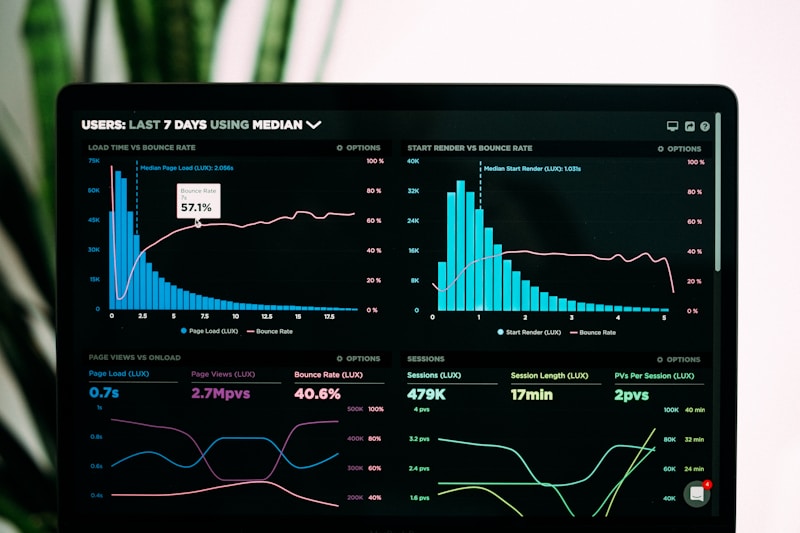
The data pipeline supporting this must be equally performant. We recommend using a streaming data platform like Apache Flink for real-time feature computation. User events are windowed into 5-second intervals, and features like "average scroll velocity" or "dwell time on carousel item" are computed on the fly. These features are written to a low-latency key-value store (e.g., Redis) where the inference service can read them with sub-millisecond latency. Any batch processing in this loop introduces stale recommendations, which directly degrades the user experience. For more on real-time event-driven architectures, refer to the Apache Flink documentation on event-driven applications.
Information Integrity and the Fight Against Algorithmic Echo Chambers
A universal entertainment platform wields immense power over what people see, think, and discuss. The AI in media and entertainment space must grapple with the responsibility of algorithmic curation. Optimizing purely for engagement can lead to filter bubbles and the amplification of sensationalist or misleading content. This isn't just an ethical concern; it's an existential risk for the platform. A loss of user trust is a loss of the platform's primary asset-its attention. Engineers must build "integrity layers" into the curation pipeline. This involves adding a diversity metric to the ranking objective. The model should be penalized for showing content that is too similar to the user's recent history. This can be implemented as a regularization term in the loss function, or as a post-processing step that re-ranks the top-N results to maximize a "novelty score." Techniques like Determinantal Point Processes (DPPs) are used to select a diverse subset of items that are individually relevant but collectively varied.
Content Provenance and Synthetic Media Labeling
Furthermore, the platform needs robust content provenance systems. As AI-generated content proliferates, the universal app must be able to label synthetic media. This requires integrating with emerging standards like the C2PA (Coalition for Content Provenance and Authenticity) specification. The app's metadata pipeline must ingest and display cryptographic provenance data, allowing users to make informed decisions about the content they consume. This is a technical challenge that intersects with public policy and platform trust. For a deeper dive on these standards, see the C2PA Technical Specification v1.3.
Monetization Models in an AI-Native Ecosystem
The business model for a universal entertainment app isn't simply a "super-aggregator" subscription. The AI layer enables novel monetization strategies. Dynamic ad insertion, for example, can become truly contextual. Instead of targeting ads based on broad demographics, the AI can insert ads that match the emotional tone of the scene or the user's current activity. This requires an ad serving engine that can negotiate with demand-side platforms in real-time, evaluating bids against the user's intent vector. Another emerging model is "micro-licensing." The AI can identify a user's deep interest in a specific character or scene. It can then offer the ability to purchase a short-form clip, a digital collectible, or a related piece of user-generated content. This creates a long-tail revenue stream that's impossible to manage manually but trivial for an AI system to orchestrate. The platform becomes a marketplace for attention, powered by instantaneous content valuation algorithms.
Financial Infrastructure for Micro-Transactions
However, this introduces significant complexity in payment processing and rights accounting. The platform must track every micro-transaction and split revenue with thousands of content partners. This requires a settlement engine built on a robust event log, potentially using a distributed ledger for transparency. The AI entertainment apps of the future will be as much financial platforms as they are media platforms, requiring deep integration with payment gateways and compliance systems.

FAQ
1. How does a universal entertainment app handle regional licensing restrictions?
It uses a federated content layer and a real-time rights management service. The AI orchestrator queries this service before recommending any title, filtering out content that isn't available in the user's geographic region or included in their current subscription bundle. This is implemented as a constraint in the recommendation pipeline, ensuring that AI content curation never surfaces unavailable titles.
2. What is the key difference between a traditional recommender and an AI orchestrator?
A traditional recommender is reactive and based on historical patterns (e.g., collaborative filtering). An AI orchestrator is proactive and context-aware. It uses real-time user signals (scroll speed, time of day) and a knowledge graph of content to decide what to show, when to show it, and how to present it (e.g., short-form vs. long-form). This is the core of intelligent content discovery.
3. How do these platforms prevent echo chambers and filter bubbles?
Engineers build integrity layers into the ranking model. This includes adding a diversity metric to the optimization objective, using techniques like Determinantal Point Processes (DPPs) to ensure a varied selection of content, and incorporating content provenance labels (e.g., C2PA) to help users identify AI-generated media.
4. What is the biggest technical challenge in building such a system?
The latency budget. The entire personalization pipeline-from event ingestion to model inference to feed rendering-must complete in under 300ms. This requires a hybrid architecture with on-device models for fast initial ranking and cloud models for deep re-ranking, all connected by a real-time streaming data platform like Apache Flink and a low-latency cache like Redis.
5. How do these apps handle the "cold start" problem for new content?
They use content-based feature extraction. A pipeline of AI models (vision transformers for visual style, speech-to-text for dialogue, NLP for plot summaries) generates a feature vector for the new content. This vector is then mapped into the user's existing preference space using transfer learning, allowing the system to recommend it immediately without waiting for user interaction data. This is essential for personalized streaming of new releases.
Join the discussion
Given the immense data processing and real-time inference requirements, do you believe a centralized cloud architecture or a federated edge-cloud hybrid is the more sustainable path for a universal entertainment platform?
As AI curation becomes more sophisticated, should platforms be required by regulation to disclose the diversity metrics and algorithmic weights used to break filter bubbles, or is this a matter best left to internal ethics boards?
How do we architect a feedback loop that accurately measures user satisfaction (not just engagement) when the primary signal-like a user watching a sad film-might be emotionally complex and not easily captured by a simple "completion rate" metric?
Conclusion
The rise of the universal entertainment app isn't a product story; it's an infrastructure story. It demands a fundamental rethinking of how we build media systems-moving from siloed catalogs to federated content meshes, from static recommendation lists to real-time, context-aware orchestrators, and from click-based metrics to deep satisfaction signals. For engineers, this is a fascinating challenge that sits at the intersection of distributed systems, machine learning, and ethical design. The winners won't be the companies with the largest libraries, but those that build the most intelligent, performant, and trustworthy AI-powered entertainment ecosystem. The code is being written now, and the question is: what will you build?
If you're architecting the next generation of media platforms and need a partner with deep experience in real-time AI systems and scalable cloud infrastructure, contact our team to discuss your vision. For further reading on the technical foundations of content provenance, see the C2PA Technical Specification v1.3 and for a deep dive on real-time feature engineering, refer to the Apache Flink documentation on event-driven applications.
If you have any questions, please don't hesitate to Contact Me.
Back to Blog